The summer of 2022 left its mark on the British psyche in ways that went beyond scorched lawns and melted motorway surfaces. When temperatures breached 40°C for the first time in recorded history, it became impossible to dismiss extreme heat as an anomaly. For the construction industry, that moment crystallised a challenge that professionals had been quietly discussing for years: the UK built environment was not designed for the climate it is now inheriting.
The response from homeowners and businesses has been swift and, in some respects, troubling. Sales of traditional air conditioning units have surged dramatically in recent years, with the UK market growing at a pace that would have seemed implausible a decade ago. Estimates suggest that millions of units are now installed across the country, with demand spiking sharply during every prolonged warm spell.
This is understandable. People need thermal comfort, and the instinct to reach for a standalone air conditioning unit is a natural one. But from an industry perspective, this trajectory raises serious concerns. Conventional AC units are energy-hungry, refrigerant-dependent, and do nothing to address space heating which, in a country where gas boilers still dominate, remains the largest single source of domestic carbon emissions. Installing one solves a short-term comfort problem while entrenching a long-term energy and carbon problem. The industry needs to make a compelling case for a better alternative and that alternative already exists.
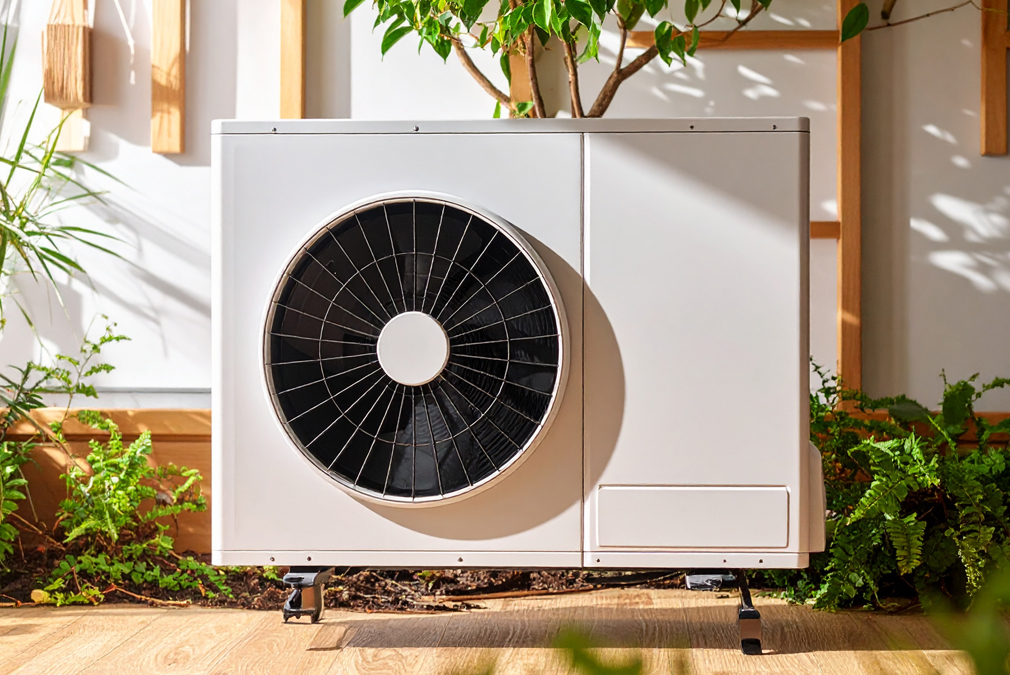
Air source heat pumps (ASHPs) have a reputation problem. For years they were associated primarily with heating, positioned as a like-for-like replacement for the gas boiler. That framing, while accurate, has obscured one of their most commercially relevant features in a warming climate: many modern heat pump systems are fully capable of providing active cooling, and even those that aren't can deliver passive cooling by reversing the flow of refrigerant to gently reduce indoor temperatures.
For developers and architects specifying new builds, this is a significant consideration. A system that handles space heating in winter, domestic hot water year-round, and cooling in summer is a genuinely holistic solution one that aligns with the direction of travel in Building Regulations, the Future Homes Standard, and the broader net zero agenda.
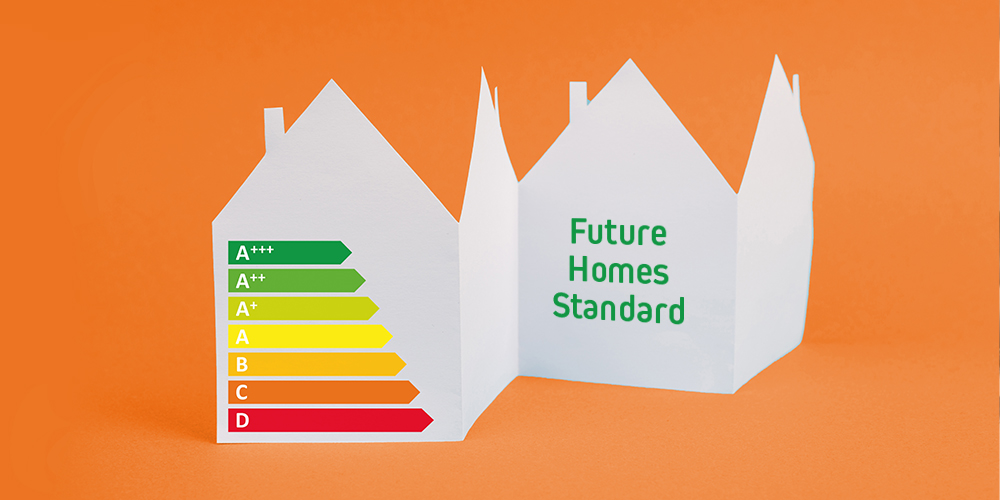
The Future Homes Standard, expected to take full effect in 2025 and now embedded in updated Part L guidance, is already pushing new residential developments toward low-carbon heating. Heat pumps are the default technology of choice for most compliance pathways. What the specification community is only beginning to absorb is that the same infrastructure investment also future-proofs homes against overheating which Part O of the Building Regulations now requires designers to actively address.
The introduction of Part O in June 2022 was a watershed moment. For the first time, overheating mitigation became a regulatory requirement for new residential developments, not simply good practice. Designers must now demonstrate through dynamic thermal modelling or simplified compliance that new homes will not overheat under projected future climate scenarios.
This changes the economics of heat pump specification considerably. Where previously a developer might have viewed the cooling capability of an ASHP as a nice-to-have, it can now be positioned as part of an integrated overheating strategy. Combined with good passive design appropriate glazing ratios, external shading, high thermal mass an ASHP with cooling capability offers a low-energy mechanical backstop that satisfies regulatory requirements without the carbon and energy penalties of conventional AC.
NHBC guidance and warranty requirements are also evolving in this space, with greater scrutiny being applied to thermal performance in new homes. Developers building to higher standards, whether through the Home Quality Mark, Passivhaus certification, or bespoke client requirements, will increasingly find that active cooling provision is expected rather than exceptional
For contractors and installers, the shift represents both a skills challenge and a commercial opportunity. The Microgeneration Certification Scheme (MCS) provides the quality framework for heat pump installation, and the Boiler Upgrade Scheme continues to offer grant support that makes ASHPs more financially accessible to end clients. The pipeline of work is substantial, and those who build competence in heat pump commissioning and controls now will be well placed as retrofit demand accelerates through the remainder of the decade.
Policymakers, meanwhile, have a role to play in ensuring that planning frameworks and permitted development rights keep pace with demand. Streamlining the approval process for external heat pump units particularly in urban and conservation areas where current rules can be prohibitive would remove a significant barrier to adoption.
The UK's instinct to cool itself with energy-hungry air conditioning units is entirely predictable, but it is a path the construction industry has both the knowledge and the responsibility to redirect. Heat pumps are not a future technology waiting to mature — they are a proven solution, available now, capable of heating and cooling, and aligned with every major regulatory and policy direction the industry is navigating.
The homes and buildings being designed and constructed today will still be standing when temperatures that currently feel exceptional become routine. The choices made at the specification stage will determine whether those buildings are part of the problem or part of the solution.